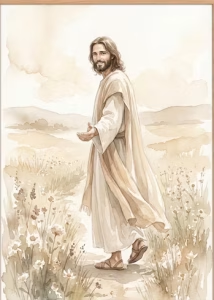
“If anyone wishes to come after me, he must deny himself and take up his cross daily and follow me. For whoever wishes to save his life will lose it, but whoever loses his life for my sake will save it. What profit is there for one to gain the whole world yet lose or forfeit himself?” Luke 9:23–25
This scripture reading in Luke’s Gospel presents us with one of the great paradoxes of our faith: the only way to save one’s life is to lose it by taking up Christ’s Cross and following Him. This truth defies human reason as we can only fully grasp it through divine revelation. The wisdom of the Cross is hidden and transformative, revealing a deeper reality that our natural instincts most likely miss.
Imagine gaining the whole world. What would that look like? From a secular perspective, it could mean possessing immense wealth, enjoying complete freedom, acquiring fame, and holding worldly power. Is it possible to attain all that the world offers and still save your soul? What if you were charitable, tithing ten percent to the church, giving to the poor? What if you lived in luxury without being attached to it? Is that truly feasible? Though some might convince themselves it is, Jesus’ life teaches us otherwise. He wasn’t wealthy by worldly standards. He had no earthly power in the conventional sense. He didn’t seek comfort or luxury. His singular focus was the salvation of souls, and He lived that mission fully.
In the mystery of the Incarnation—God becoming man—the Son of God intimately shares in every human suffering. He understands our struggles and sorrows firsthand. This is why Jesus can look at us with compassion and say, “I understand.” He is not only divine and transcendent, He is also intimately close, having lived through the very trials we face.
It is this reality that makes His words in Luke’s Gospel so powerful: “Take up your cross daily and follow me.” The Cross is the roadmap to true happiness. Now, you might be thinking to yourself that this is too much, that you can’t possibly do this. I suggest you read on, because Jesus knows you can.
Our human nature might seek to avoid suffering, but Jesus invites us to embrace it with grace, uniting it with His own suffering. Through the Cross, we find victory and fulfillment in ways that our human reasoning alone will never fully comprehend.
In Catholic spirituality, “deny yourself and take up your cross daily” is a call to live a life of self-denial, obedience, and union with Christ’s suffering and death. Jesus clearly says this in Luke 9:23. The Gospel explains that saving one’s life means losing it, but losing it for Christ’s sake means finding it.
Deny yourself – means to reject selfish desires, worldly attachments, and self-centered living. This is not about punishment, but about aligning your will with God’s will. Take up your cross daily – means to be willing to endure trials, sacrifices, and hardships for the sake of Christ. The cross is a symbol of Christ’s death and resurrection and carrying it daily means living in His spirit. Follow me – means to imitate Christ’s humility, service, and love, trusting in His guidance and example. Catholic teaching emphasizes that this is a daily commitment, not a one-time act, but an every-morning decision. It means: Renouncing worldly comforts that distract from God’s call. Accepting suffering as an opportunity for growth, conversion, and deeper union with Christ. Finding joy in obedience to God’s will, even when it is difficult.
The Catholic Church teaches that only through Christ’s cross can we enter into fullness of life—both in this world and the next. By dying to self, we participate in Christ’s death and resurrection, which brings eternal life. This is the paradox Jesus reveals: the only way to save your life is to lose it for His sake. By embracing this daily cross, Catholics live out the Gospel’s call to follow Christ in humility, sacrifice, and hope.
In other words: Denying yourself means giving up your own way; taking up your cross means accepting the cost of following Christ. It’s a daily choice to let God be Lord of your life, even when it’s hard.
Practical Examples of Taking Up Your Cross
- Self-Denial: This involves putting aside personal ambitions and desires to serve others and follow God’s will. For instance, choosing to volunteer your time to help those in need instead of pursuing leisure activities can be a form of self-denial.
- Facing Persecution: Many Christians around the world face persecution for their faith. Standing firm in your beliefs, even when it leads to ridicule or exclusion, exemplifies taking up your cross.
- Sacrificing Comfort: Choosing to live a life that prioritizes spiritual growth over material gain can be seen as taking up your cross. This might mean living simply or giving away resources to help others.
- Enduring Trials: When faced with personal struggles, such as illness or loss, maintaining faith and seeking to grow spiritually through these challenges reflects the essence of taking up your cross.
- Serving Others: Actively seeking opportunities to serve those less fortunate, whether through community service, missions, or simply helping a neighbor, embodies the spirit of selflessness that Jesus taught.
Taking up your cross is not just about enduring hardships; it also involves a deep commitment to spiritual growth and transformation. It means embracing the challenges that come with following Christ and recognizing that true discipleship often requires sacrifice and perseverance.
Ultimately, taking up your cross is a profound call to live a life of selflessness, sacrifice, and unwavering faith, reflecting the teachings of Jesus in both personal and communal contexts.
Lord, Jesus, Grant me Your gift of wisdom so I may see the glory of the Cross and the sacrifices to which You call me. Help me take up my Cross daily and follow You, trusting that it is the true path to the fulfillment I seek.
Jesus, I trust in You.