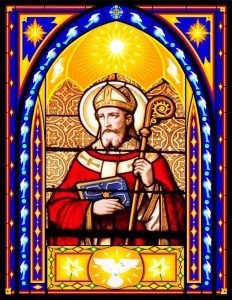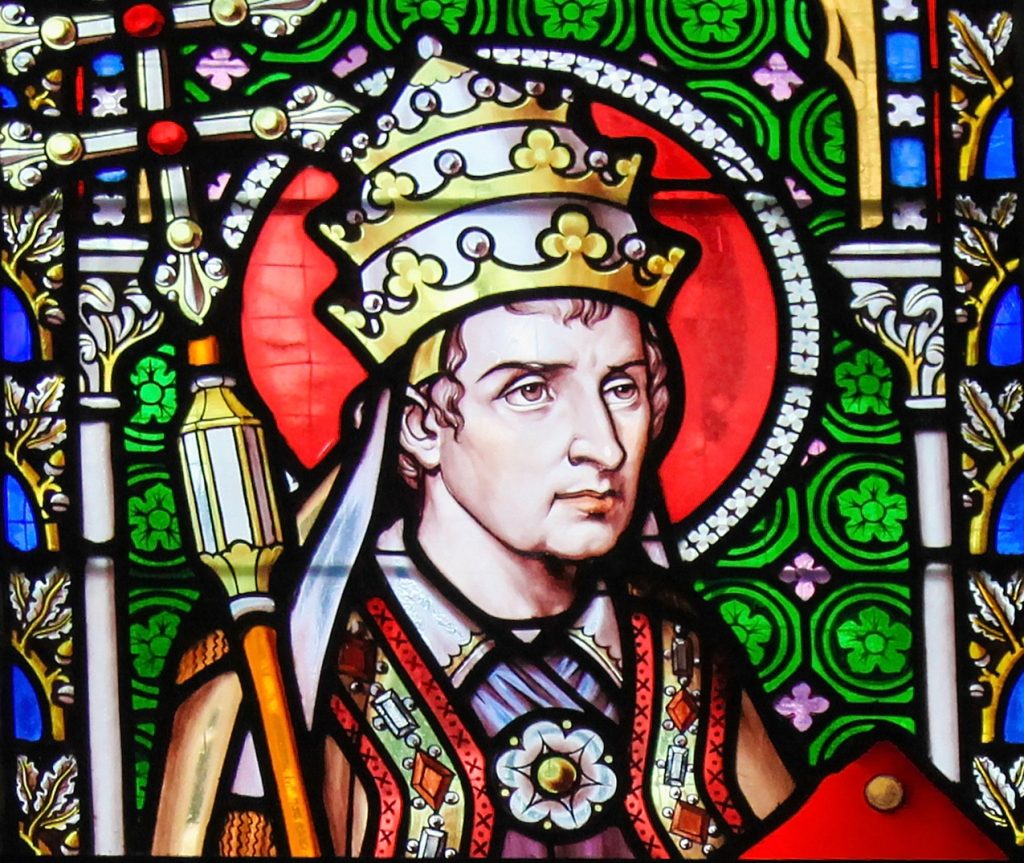
It is regrettable that so little is known about the early life of this man, who proved to be such an extraordinary shepherd of the Catholic Church. What we do know, is that he was born in Tuscany, Italy, in the 5th century, came from a noble family, and received a comprehensive education in both secular and religious studies. This upbringing provided him with a solid foundation for his future role as Pope.
Pope Leo I was the first to be called the “Great”—and for good reason. He took on just about every major heresy of his time, established the dogmas of Christ as being fully man and fully God, asserted the primacy of the papacy (instituted by Christ, papal succession traced back to Peter the Apostle) and staved off a barbarian invasion of Rome.
As Pope, he was forceful and unambiguous in his Christological teaching which affirmed the full divinity and humanity of Christ. In fact, his most famous writing, commonly known as the Tome of St. Leo (449) was the basis of the Council of Chalcedon’s (451) dogmatic definition of Christ as one Divine Person possessing two complete natures, human and divine.
St. Leo the Great was Pope during the middle of the fifth century, a very troubled time when barbarian armies were ravaging the once mighty Roman Empire. For all intents and purposes, the Western Empire was in total political and military collapse and there was a vacuum of political leadership. Pope St. Leo filled that void and became the advocate for the temporal as well as spiritual welfare of his flock.
He is perhaps most famous for persuading Attila the Hun to abandon his plans to sack the city of Rome and to withdraw his forces beyond the Danube River (452). St. Leo once again was the spokesperson for the Roman citizenry in 455 when the Vandal barbarians swept into Central Italy, securing concessions from them.
Throughout his papacy, Saint Leo played a crucial role in shaping the Church’s doctrine and defending its teachings. He was known for his strong leadership and his efforts to maintain unity within the Church. Saint Leo’s writings and teachings, which emphasized the authority of the papacy and the divinity of Christ, continue to be studied and revered by theologians and scholars.
The writings that survive by St. Leo, besides his famous Tome, consist of 143 letters and 96 sermons. His sermons cover every season of the liturgical year and are a veritable treasure. They reveal to us a man with a clear and vigorous way of teaching the faith passed down from the apostles. St. Leo the Great, who died in 461, is regarded as one of the most important of the Western Fathers of the church. He was declared a “Doctor of the Church” by Pope Benedict XIV.